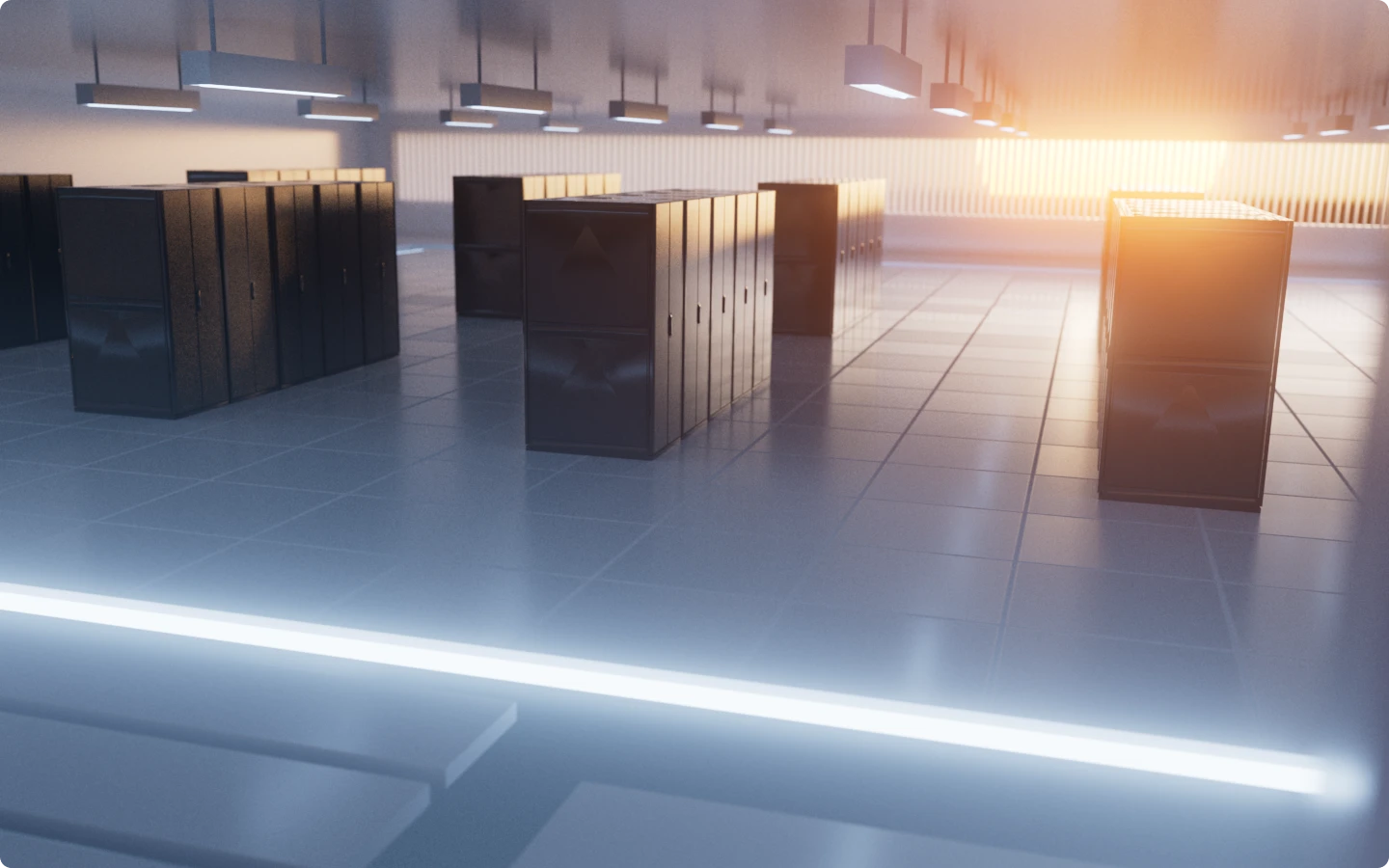


Optimized power chains, immersion cooling, hydrogen generators, SF6-free high-voltage equipment, AI-driven building management... There is no shortage of innovations to reduce the environmental impact of data centers. A closer look at five of them.
France currently has some 250 data centers with an installed available capacity of 566 MW. By 2033, this capacity is expected to reach 1.8 GW, according to EY-Parthenon estimates.
This rapidly growing capacity aims to meet the exponential demand for power coming from a range of uses: artificial intelligence, cryptocurrency mining, HPC computing and simulators. In this context, data center managers are testing and deploying many technological innovations, whose environmental benefits vary depending on the situation.
1) PUE efficiency: the power chain as a key element
PUE (Power Usage Effectiveness) is an indicator calculated by dividing the total energy consumed by the data center by the total energy used by IT equipment (servers). It highlights a data center's ability to control its energy efficiency.
“When it comes to PUE, the main upcoming innovations concern the UPS power chain. UPS systems now have phenomenal efficiency rates, close to 100%. There is practically no more loss along the power chain, which is a remarkable technological leap forward,” says Damien Desanti, Founder and CEO of PHOCEA DC.
2) PUE optimization: the importance of cooling
“Thanks to immersion cooling, we achieve server densities a hundred times higher”
Another very important innovation for optimizing a data center's PUE is immersion cooling. This technology involves fully immersing server components in a non-conductive liquid, which eliminates any risk of short circuit or oxidation.
“Thanks to immersion cooling, we now achieve server densities a hundred times higher than those we had just a few years ago. We are reaching densities of around 300 kVA per IT rack, which corresponds to the maximum electrical load the installation can support,” explains Damien Desanti.
The technique known as DLC (Direct Liquid Cooling) is used by many manufacturers, because it does not require an in-depth redesign of data centers. “DLC works with standard racks. Only the most power-hungry components (processors, graphics cards...) are cooled. But when you need a lot of power per rack, you switch to immersion cooling, which can bring PUE down to 1.05, or even 1.03,” notes Damien Desanti.

3) Hydrogen for backup generators
Backup power for most data centers is currently provided by diesel generators. To replace them, data centers can use hydrogen generators. These are a reliable, quiet and non-polluting alternative (no particulate emissions) to combustion-engine generators.
“Using hydrogen-powered generators has a positive impact, but it is minor. Apart from a few monthly tests, generators actually run very little in a data center. And when an outage occurs, once every five years, the generators run for 48 hours at most,” explains Damien Desanti.
4) SF6-free high-voltage equipment
“Legislation must put an end to the manufacture of equipment that still contains SF6 and require all data centers to buy SF6-free equipment”
Colorless, odorless, non-combustible and chemically very stable, sulfur hexafluoride (SF6) is a synthetic gas widely used in high-voltage electrical equipment. But sulfur hexafluoride is an extremely potent greenhouse gas.
Fortunately, manufacturers of high-voltage switchgear have managed in recent years to replace this gas with vacuum. Eliminating it saves 20 metric tons of CO2 per kg of gas. This saving, however, is only counted once, when the equipment is manufactured.
“Legislation must put an end to the manufacture of equipment that still contains SF6 and require all data centers to buy SF6-free equipment. Public authorities must also speed up Enedis's adoption of this new high-voltage switchgear standard,” adds Damien Desanti.
5) AI at the service of the data center
Artificial intelligence brings many benefits, and they also apply to data centers. By taking a wide range of information into account, AI can manage a data center and optimize its parameters.
“In real time, artificial intelligence takes into account internal data, such as cooling, power consumption and access control, but also data from the outside environment: the weather, temperature, wind, ambient noise... With this information, AI will run the data center and make it as efficient as possible relative to its indoor and outdoor environment,” says the Founder and CEO of PHOCEA DC.
If a customer starts consuming more energy than usual in the middle of the night, or if a storm breaks out in the late afternoon, the AI will immediately adjust the output of the chillers so that their activity matches the time of day. In a way, AI makes the building that houses the data center intelligent.

There are many innovations that make data centers more environmentally sustainable. They help reduce various aspects of the environmental impact of data center operations.
Learn more about PHOCEA DC, a provider of sovereign, eco-responsible data centers. PHOCEA DC is based in Marseille. Its data center covers 1,700 m² with 1.2 MW of power. Compliant with the Tier III standard, it will combine reliability and energy efficiency. Its hosting services are designed for local and national organizations: local authorities, businesses, telecom operators and managed service providers.